
Business Analysis in ERP and other COTS (Commercial Off The Shelf Solution) environments goes far beyond gathering requirements. It demands a deep understanding of systems, data, and business value.
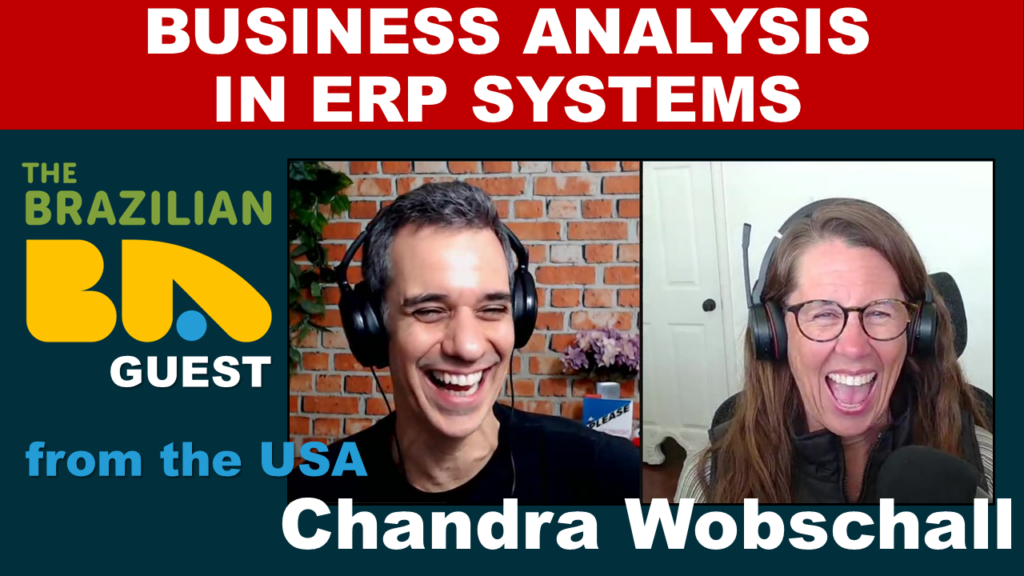
In this conversation with Chandra Wobschall, a Senior Business Analyst with over 15 years of experience, we explore how business analysts can bridge gaps, drive efficiency, and act strategically in complex enterprise systems.

Watch the other episodes in this podcast series featuring interviews with experts from around the world.
From Accounting to Business Analysis
Chandra’s journey into business analysis was not planned. Starting her career in accounting, she gradually developed an interest in the technical side of ERP systems, particularly JD Edwards. This transition highlights a common path for many business analysts: moving from domain expertise into a hybrid role that blends business knowledge with technical capability.
Her story reinforces that a strong business understanding can be a powerful foundation for becoming an effective business analyst, especially when combined with curiosity and continuous learning.
The Technical Edge: Data, SQL, and Systems Thinking
One of the most significant challenges Chandra faced was mastering the technical aspects of the role. She emphasizes the importance of:
- Understanding data structures and relationships
- Writing complex SQL queries
- Ensuring data integrity across processes
While many business analysts avoid deep technical skills, in Chandra’s experience, working closely with data significantly enhanced the value she delivers. In ERP environments, data consistency is critical.
The True Value of Business Analysis
According to Chandra, the core value of business analysis lies in bridging the gap between business and technology. Business analysts act as translators between stakeholders and technical teams, ensuring both sides understand each other.
Beyond communication, she highlights three key contributions:
- Maximizing system capabilities by leveraging existing features instead of customizing unnecessarily
- Reducing technical debt by avoiding unnecessary customizations
- Driving process efficiency through automation and standardization
This perspective positions business analysts not just as requirement gatherers, but as value enablers.
Configuration vs Customization vs Development
A key distinction in ERP work is understanding how solutions are implemented:
- Configuration: Adjusting system settings without changing code
- Customization: Modifying the system’s code to meet specific needs
- Development: Building new functionality or integrations
Chandra emphasizes that business analysts should prioritize configuration whenever possible. This approach reduces complexity, lowers maintenance costs, and aligns with modern cloud-based systems where customization is often limited.
How Solutions Are Discovered
When faced with a business need, Chandra combines multiple approaches:
- Leveraging past experience
- Analyzing official documentation
- Using AI tools (with caution and validation)
- Engaging with user communities and forums
This multi-source approach reflects a modern BA mindset, combining traditional research with emerging tools like AI, while maintaining critical thinking.
The Strategic Role of Business Analysis
One of the most insightful parts of the conversation is the shift toward strategic business analysis.
Instead of simply responding to requests, business analysts should ask:
- What problem are we actually trying to solve?
- Is this a system issue, or a process or people issue?
- What is the real value of this request?
Chandra shares examples where a requested feature was not the best solution and sometimes no system change was needed at all.
This ability to challenge assumptions and focus on outcomes is what elevates business analysis from operational to strategic.
What Defines a Senior Business Analyst
For Chandra, seniority is not just about years of experience. The real difference lies in mindset:
- A junior BA focuses on solving assigned problems
- A senior BA looks at the bigger picture, identifying patterns and opportunities
Senior BAs proactively seek ways to:
- Automate processes
- Reduce manual work
- Maximize return on investments
They go beyond the request to uncover unseen opportunities for value creation.
Continuous Learning and Community
Chandra also highlights the importance of learning through community and modern channels. Co-hosting The JDE Connection podcast with Paul Houtkooper, she contributes to sharing knowledge among professionals in the ERP ecosystem.
Her approach shows that learning is no longer limited to formal education. Podcasts, communities, and real-world exchanges have become essential tools for continuous development.
Acknowledgment

I want to thank the International Institute of Business Analysis for supporting this initiative.
As part of the IIBA community and serving as Senior Advisor to the President & CEO, it’s a privilege to help bring forward the voices of practitioners shaping our profession.
References
- Listen to this and other episodes on The Brazilian BA Guest on Spotify
- Connect with Chandra Wobschall on LinkedIn
- Listen to the The JDE Connection podcast with Chandra Wobschall and Paul Houtkooper
- Watch other episodes of The Brazilian BA Guests on the Current State of Business Analysis
- Connect with the global Business Analysis community at iiba.org