
In a recent Thought Leader podcast hosted by LN Mishra, Fabrício Laguna shared valuable perspectives on how the role and discipline of business analysis are evolving in the era of Generative AI.
Drawing from decades of experience and deep involvement with the International Institute of Business Analysis (IIBA), Laguna offers a compelling narrative about where business analysts (BAs) stand today and where they must go next.
From Accidental Roles to Strategic Discipline
Both Laguna and Mishra reflect on a familiar theme: many professionals enter Business Analysis “By Accident.” However, Laguna emphasizes a critical distinction:
- Business Analysis as a Role: Often tied to job titles and responsibilities.
- Business Analysis as a Discipline: A universal skill set applicable across professions.
According to Laguna, business analysis as a discipline is not confined to those labeled as busines analysts. Instead, it is a foundational competency for anyone involved in business transformation, including product and project managers, architects, developers, marketers, and executives.
“Business analysis helps us understand stakeholders, define the expected outcomes, and drive to value creation, skills that benefit every professional.”
The AI Disruption: Threat or Opportunity?
The rise of Generative AI tools has dramatically reshaped how work is performed. Tasks that once took weeks, such as documentation, requirement gathering, and meeting summaries, can now be completed in seconds.
However, AI does not replace the need for business analysis, it amplifies it.
Key Insight:
AI is only as effective as the person using it.
Just as a doctor is needed to interpret medical data, a skilled business analyst is required to:
- Ask the right questions
- Interpret AI-generated outputs
- Apply business context and judgment
“A fool with a tool is still a fool, but a skilled professional with AI becomes exponentially more powerful.”
The Shift in the BA Role
While AI automates many technical and documentation-heavy tasks, it elevates the importance of human-centric capabilities.
What’s Declining:
- Manual documentation
- Basic requirements writing
- Repetitive analysis tasks
What’s Rising:
- Stakeholder alignment
- Strategic thinking
- Decision facilitation
- Outcome-driven analysis
The true value of a BA now lies in connecting people, clarifying complexity, and guiding decisions.
From Execution to Strategy
As AI accelerates development cycles, the bottleneck changes from building solutions to deciding what to build.
This shift positions business analysts at the center of strategic conversations:
- Pre-project: Evaluating alternatives and defining direction
- During projects: Aligning stakeholders and ensuring clarity
- Post-project: Measuring outcomes and business value
“The bottleneck is no longer development, it’s decision-making. And that’s where business analysts thrive.”
AI Literacy: A Must-Have Skill
AI literacy includes:
- Understanding how AI works (probabilistic vs. deterministic decisions)
- Knowing when to trust AI and when not to
- Recognizing risks such as bias and lack of explainability
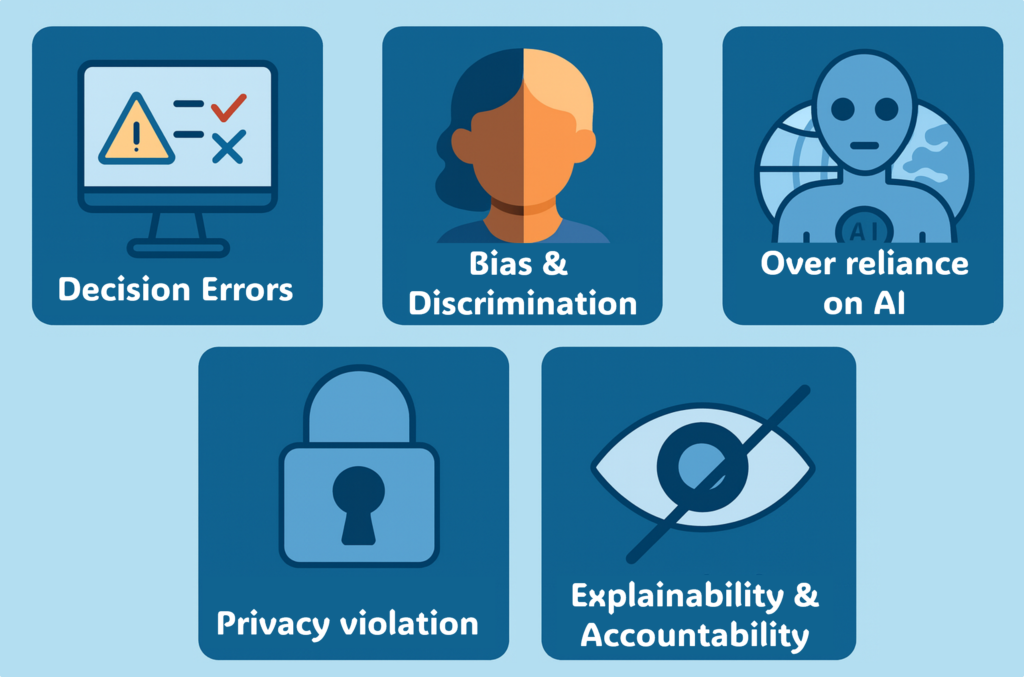
Check out the FABR Framework for the Five AI Business Risks.
For example:
- AI is excellent for language, communication, and pattern recognition
- But critical decisions (e.g., loan approvals) require clear rules, transparency, and human oversight
Soft Skills Are the New Power Skills
As technical tasks become automated, behavioral competencies take center stage.
Key skills for future-ready BAs:
- Communication and facilitation
- Critical thinking
- Empathy and stakeholder management
- Strategic mindset
“When you shift from output to outcome thinking, you naturally transform how you work and deliver value.”
A Recommended Read: Please Hold
Laguna also highlights his book, Please Hold, a corporate novel that illustrates the transformation from task-driven work to value-driven thinking.
The story follows a call center employee who evolves by focusing on solving real customer problems rather than merely completing tasks, demonstrating the essence of business analysis in action.

Find out more about the outcome-driven mindset by reading Please Hold – The Power of Outcome-Driven Thinking, a fun business novel for anyone driving real change at work and beyond.
Leading the AI-Driven Transformation
Laguna’s final message is clear:
“Do not fear AI, lead it.“
Business analysts are uniquely positioned to guide organizations through this AI transformation by:
- Facilitating conversations about AI adoption
- Identifying opportunities for innovation
- Ensuring ethical and effective implementation
“You don’t need to have all the answers, you need to lead the conversation.”
Connect and Learn More
To continue the conversation and explore more insights:
- Connect with Fabrício Laguna on LinkedIn
- Connect with LN Mishra on LinkedInhttps://www.linkedin.com/in/lnmishra-cbap/
- Check out The Adaptive US certification courses at https://www.adaptiveus.com/