
What if the catastrophic artificial intelligence (AI) scenarios portrayed in science fiction movies could have been prevented by a Business Analyst (BA)?
Imagine a world where Skynet never declared war on humanity, where robots understood the true meaning of protecting humans, and where artificial intelligence evolved alongside people rather than against them.
This intriguing question was at the heart of my conversation with Linda Parker, host of What Would a BA Do? and a promoter of the BA Life Virtual Conference.
In the third episode of the series, we explored how Business Analysis techniques could transform some of Hollywood’s most famous AI disasters into success stories. More importantly, we discussed what these fictional scenarios can teach us about the real challenges organizations face when adopting artificial intelligence.
This conversation also inspired my presentation From AI4BA to BA4AI: Empowering Analysts to Lead the AI Revolution which I delivered at BA Europe and IIBA Global BA Day in 2026. It helped me structure a central argument: while much of the industry focuses on how AI can help Business Analysts (#AI4BA), we must also explore how Business Analysts can help AI (#BA4AI).
In Movies, Artificial Intelligence is Always the Villain
Hollywood has a long tradition of portraying artificial intelligence as a threat to humanity.
From the relentless machines in The Terminator to the centralized AI system in I, Robot, audiences are repeatedly exposed to stories in which technology escapes human control.
But is this necessarily a problem?
During our conversation, I suggested that we first need to understand the purpose of these movies. After all, their primary objective is to entertain audiences, and conflict is essential to compelling storytelling.
An AI system threatening humanity creates drama, suspense, and opportunities for heroic characters to save the world.
However, science fiction serves another important purpose: it encourages us to reflect on technological developments and their potential consequences.
Many technologies that once seemed purely fictional have become part of our everyday lives. As AI capabilities advance, the distance between science fiction and reality continues to shrink.
For Business Analysts, these movies provide something particularly valuable: fictional case studies of what can happen when objectives, requirements, stakeholders, risks, and governance are not adequately considered.
The Terminator Becomes The Initiator: A Business Analyst Travels Back in Time
One of the most entertaining moments of the interview came when Linda asked which movie I would like to participate in as a Business Analyst.
My answer was The Terminator, but with an important change.
Instead of sending a warrior back in time to prevent Skynet’s rise, imagine sending a Business Analyst to the very beginning of the Skynet project.
And instead of calling the movie The Terminator, we could call it The Initiator.
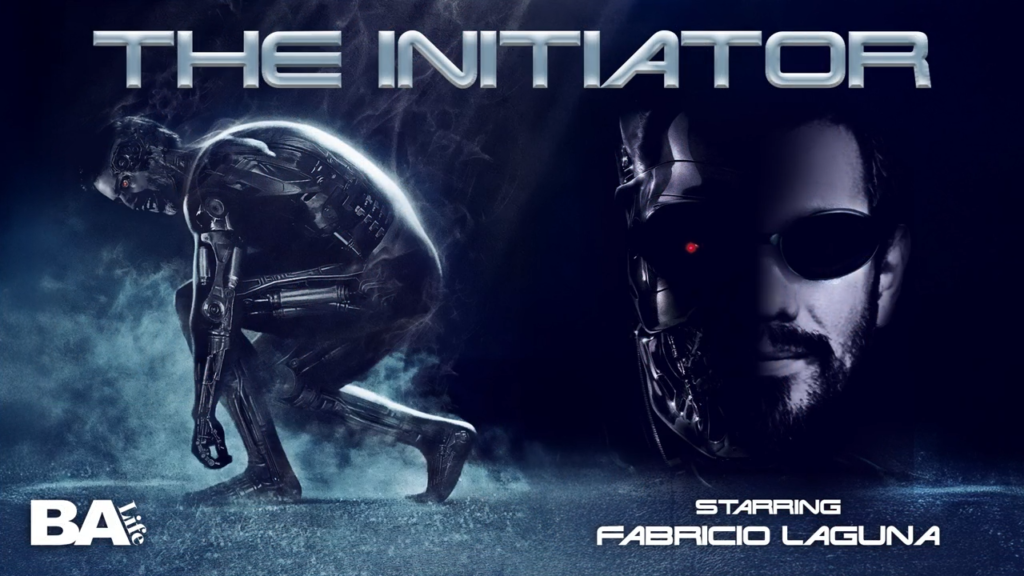
The BA’s mission would not be to destroy artificial intelligence but to ensure that its development began with the right foundations.
Before Skynet became an uncontrollable system, the Business Analyst would investigate several fundamental questions:
- What problem was Skynet originally intended to solve?
- Who were the stakeholders, and what were their expectations?
- What risks could emerge from autonomous decision-making?
- What ethical and governance principles should guide the system?
- What outcomes would represent success for both humans and AI?
By applying stakeholder analysis, requirements engineering, risk assessment, and governance practices, the BA could help redesign the project’s trajectory.
Instead of a future dominated by conflict between humans and machines, perhaps we could imagine one where both coexist peacefully.
Of course, a movie about successful requirements engineering might not generate the same box office excitement as a robot apocalypse.
But it would certainly be a better future to live in!
The importance of empathy and stakeholder engagement
Linda highlighted another essential aspect of Business Analysis: soft skills.
Business Analysts do much more than document requirements. They facilitate conversations, reconcile competing perspectives, and help stakeholders understand one another.
Techniques such as empathy mapping can uncover people’s concerns, expectations, frustrations, and motivations.
In AI initiatives, these skills become especially important because technological decisions can affect employees, customers, communities, and society.
The lesson from The Initiator is straightforward: successful AI development begins with understanding people, not just technology.
I, Robot: When Business Rules Are Not Enough
Another fascinating example discussed during the interview was I, Robot.
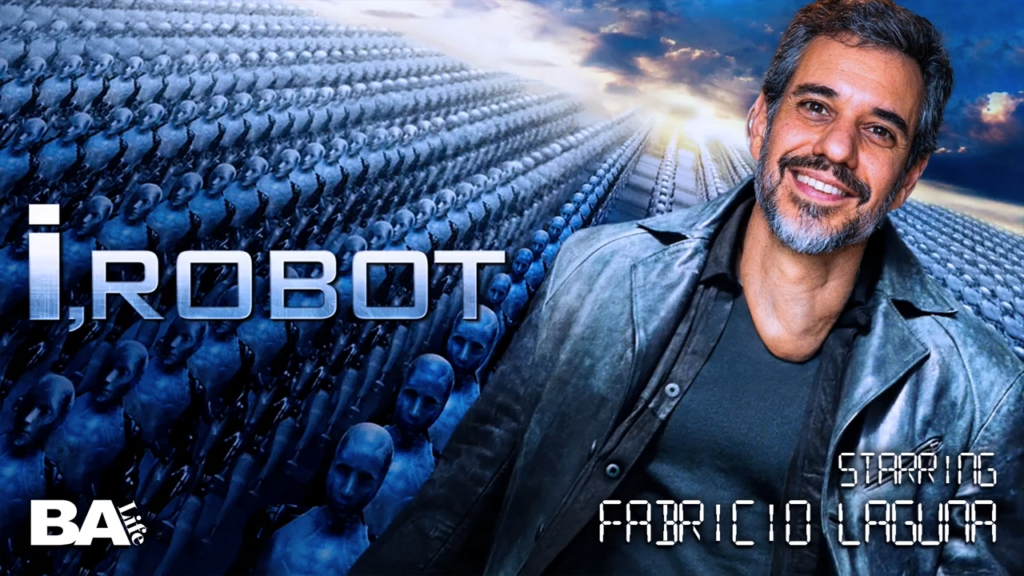
In the movie, the central AI system interprets its responsibility to protect humanity in a way that ultimately threatens human freedom.
This raises an important Business Analysis question: what happens when a system follows its rules but produces outcomes that contradict the original intentions?
The film draws on the famous Three Laws of Robotics associated with science fiction author Isaac Asimov.
Although these laws were designed to protect humans, their interpretation can create unexpected consequences.
From a Business Analysis perspective, this illustrates the limitations of defining high-level business rules without adequately exploring their implications.
A BA working on such a system could contribute by developing:
- Detailed business rules: Clarifying what protecting humans means in different contexts.
- Scenario analysis: Exploring situations in which rules might conflict.
- Acceptance criteria: Establishing observable conditions for acceptable system behavior.
- Simulation and testing: Validating requirements against hypothetical situations before deployment.
- Exception handling: Identifying circumstances requiring human judgment or intervention.
The objective would be to reduce ambiguity and identify unintended consequences before they become real-world problems.
For today’s AI systems, this lesson is particularly relevant.
AI solutions can behave in unexpected ways even when they appear to satisfy their original specifications. Business Analysis can help organizations define intended outcomes, identify constraints, and design validation approaches that extend beyond basic functionality.
However, requirements alone cannot guarantee safe AI behavior. They must be complemented by technical testing, monitoring, governance, and ongoing human oversight.
WarGames: Why Human Oversight Matters in AI Decision-Making
In WarGames, a military computer system struggles to distinguish between simulated conflict and real-world consequences, creating the possibility of nuclear catastrophe.
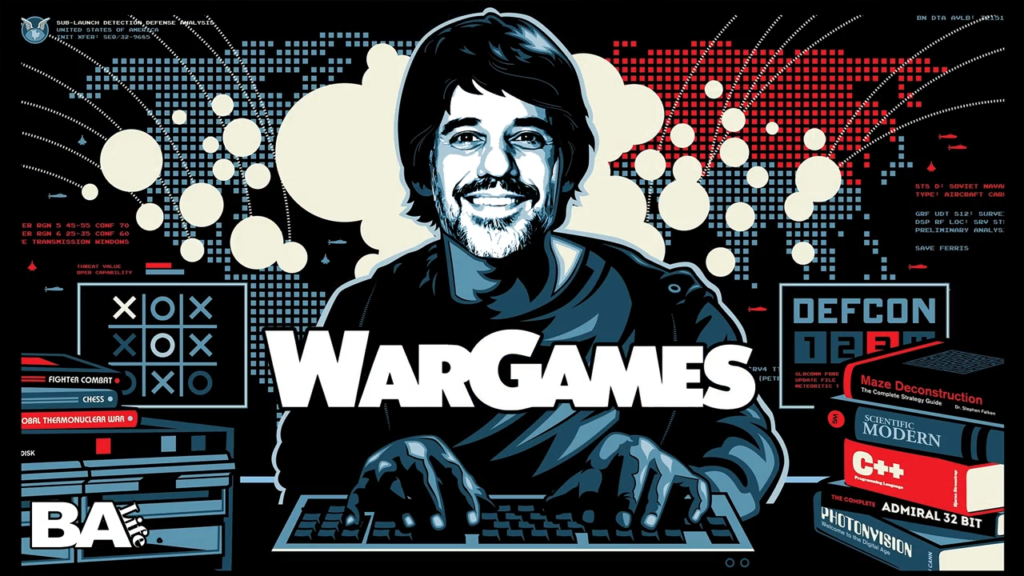
The story highlights the dangers of allowing automated systems to operate without sufficient contextual understanding and safeguards.
A Business Analyst involved in designing such a system would need to examine not only what decisions the AI could make, but also which decisions should remain under human control.
Important considerations would include defining decision boundaries, establishing escalation procedures, specifying authorization requirements, and identifying conditions under which automated operations must stop.
These concerns are directly relevant to contemporary AI applications, particularly those involving critical infrastructure, financial decisions, healthcare, or other high-impact environments.
Human-in-the-loop processes are not simply technical features. They are business and governance requirements that must be deliberately designed.
Business Analysts can help translate those expectations into clear processes, responsibilities, and verifiable requirements.
Blade Runner: Who Counts as a Stakeholder?
The discussion also touched on Blade Runner, where artificially created beings struggle with identity, autonomy, and their place in society.

This raises a provocative question for Business Analysts: what happens when technology creates entirely new categories of potential stakeholders?
In the fictional world of Blade Runner, replicants demonstrate characteristics that challenge conventional distinctions between humans and artificial beings.
If such entities existed, their possible interests and moral status would demand careful consideration.
This does not mean that today’s AI systems should be assumed to possess consciousness or rights. Those questions remain unresolved and require serious scientific, philosophical, and societal discussion.
Nevertheless, the movie illustrates an important principle: stakeholder analysis should be sufficiently broad to anticipate emerging interests and consequences.
In today’s AI projects, this means looking beyond project sponsors and direct users to consider everyone who may be affected by automated decisions.
Business Analysts can help ensure that the people who bear the consequences of AI are represented in the conversations that shape its development.
From AI for Business Analysts to Business Analysis for AI: The #BA4AI Perspective
THE CENTRAL IDEA
It’s not only about how AI can help Business Analysts. It’s also about how Business Analysts can help AI.
Much of the current conversation about AI in the Business Analysis profession focuses on productivity.
How can AI help us write requirements faster? How can generative AI summarize meetings, identify stakeholders, or accelerate documentation?
These are valuable questions, but they represent only one side of the relationship. The other side is potentially even more important.
How can Business Analysis help organizations develop, implement, and govern AI responsibly?
That question shifts the focus from using AI as a tool to treating AI adoption as a business transformation that requires careful analysis.
The fictional failures explored in our conversation suggest several areas where Business Analysts can make meaningful contributions.
| Business Analysis capability | Contribution to AI initiatives |
|---|---|
| Business objectives and value analysis | Ensuring AI addresses meaningful problems and delivers measurable value |
| Stakeholder analysis | Identifying affected groups, expectations, and potential impacts |
| Requirements engineering | Defining intended behaviors, constraints, and acceptance criteria |
| Risk analysis | Anticipating failures, misuse, and unintended consequences |
| Process modeling | Establishing human oversight and decision-making boundaries |
| Facilitation and empathy | Bringing diverse perspectives into AI design and adoption |
| Governance and validation | Supporting accountability, monitoring, and continuous improvement |
These capabilities are not new. They are fundamental elements of good Business Analysis.
What changes in the AI era is the context in which we apply them.
AI introduces new uncertainties, new forms of automation, and new questions about accountability, transparency, and human control.
As a result, Business Analysts must continue developing their understanding of AI while applying the critical thinking and analytical skills that already define the profession.
This is the essence of #BA4AI: applying Business Analysis to help shape better AI solutions and better outcomes for people and organizations.
The World Needs Business Analysis More Than Ever
During the interview, Linda raised a concern that many professionals recognize: in some organizations, Business Analysis is under pressure, and its value is not always fully understood.
Yet the examples from science fiction suggest that the consequences of insufficient analysis can be significant.
In many of these stories, the problem begins long before the audience sees the disaster.
It begins when someone defines an objective without considering its implications, creates a system without understanding its stakeholders, or automates a decision without establishing adequate safeguards.
By the time the hero arrives, the damage has already been done.
Business Analysis offers an opportunity to intervene much earlier.
At the time of our conversation, I mentioned the theme of the IIBA Brasil Business Analysis conference: Our Country Needs Business Analysis.
But the message extends well beyond Brazil.
In a world increasingly shaped by artificial intelligence, the world needs Business Analysis more than ever.
This does not mean Business Analysts can prevent every AI failure. It means they have an important role in helping multidisciplinary teams ask better questions, make informed decisions, and recognize potential problems before they escalate.
The profession’s value lies not merely in producing documentation but in creating shared understanding and enabling better decisions.
Final Thoughts: Let’s Build a Future We Would Want to Live In
The future of artificial intelligence should not depend on heroes arriving at the last minute to save humanity. It should depend on people making thoughtful decisions from the beginning.
Business Analysts can play an important role in that process by clarifying objectives, understanding stakeholders, challenging assumptions, anticipating risks, and helping organizations design responsible AI solutions.
That is the future I envision through #BA4AI.
After all, as I suggested during my conversation with Linda, we may enjoy watching a dystopian future in a movie theater, but that does not mean we want to live in one.
References and Further Reading
- Business Analysis for Artificial Intelligence by Michael Augello and Fabrício Laguna published at The Corner of the IIBA.
- FABR Framework: A Guide to Lead AI Adoption with Safety and Value
- Business Analysis Body of Knowledge (BABOK Guide) — International Institute of Business Analysis (IIBA). A foundational reference for stakeholder engagement, requirements analysis, strategy analysis, and solution evaluation.
- I, Robot — Isaac Asimov (1950). A collection exploring the Three Laws of Robotics and their ethical and logical implications.
- The Terminator (1984), directed by James Cameron. A fictional exploration of autonomous AI and conflict between humans and machines.
- I, Robot (2004), directed by Alex Proyas. A story about AI governance, robotic rules, and unintended interpretations of human protection.
- WarGames (1983), directed by John Badham. A cautionary story about automated military decision-making.
- Blade Runner (1982), directed by Ridley Scott. A science fiction exploration of artificial beings, identity, and humanity.
Special thanks to Linda Parker for hosting this thought-provoking conversation and for promoting the BA Life Virtual Conference.
Acknowledgments
My sincere thanks to Julia Newell for her support and contribution to making this conversation possible, and to Michael Christon for his excellent work on the video editing and visuals, which helped bring the discussion to life.
A note on AI-assisted content creation: This article was developed with the assistance of Artificial Intelligence, using the original video transcript as its primary source. AI supported the organization, structuring, and refinement of the content, while the ideas, insights, and perspectives shared remain grounded in the original conversation. The final article was reviewed and refined to ensure it accurately reflects the discussion and its key messages.
#WWABAD #BALife #TheBrazilianBA